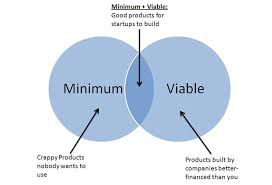
The most common startup validation mistakes involve skipping the step of confirming market demand, relying on friends and family for feedback, and designing research methods that lead to biased results. Avoiding these pitfalls is key to building a viable product and business.
What is Startup Validation and Why It Matters
Startup validation is like testing the waters before diving in. It’s the process of proving your business idea has a real market. You want to know if people will actually buy your product or use your service.
It’s about gathering evidence. This evidence shows that your idea is sound.
Why does this matter so much? Well, think about it. You might have the most amazing idea.
But if no one needs it, or if they can’t afford it, it won’t go anywhere. You could spend a lot of time and money building something nobody wants. That’s a tough lesson.
Proper validation saves you from this pain. It helps you make changes early on. It makes sure you are building something people truly want.
It also guides your decisions. Knowing what your potential customers like helps you build the right features. It helps you set the right price.
It even helps you know where to find them. This is all about reducing risk. It’s about increasing your chances of success.
Skipping validation is like building a house without a blueprint. You might get lucky, but it’s far more likely to fall down.
Common Startup Validation Mistakes
Many new founders make similar errors when trying to validate their ideas. These mistakes can be costly. They can lead to wasted resources.
They can even cause the business to fail before it truly begins. Let’s break down the most frequent ones.
1. Not Talking to Enough Real Customers
This is a big one. Many founders talk to their friends. They ask their family.
They might even ask colleagues who are nice to them. These people often want to be supportive. They might say “That’s a great idea!” This isn’t helpful feedback.
It’s often just polite encouragement.
The problem is, your friends and family might not be your target customers. They might not have the same needs or budget. You need to talk to people who would actually pay for your product.
You need to hear their honest opinions. This means finding people who represent your ideal customer. This can be hard.
But it’s essential.
I remember a friend who was developing a niche app. He showed it to everyone he knew. They all said it was cool.
But he hadn’t shown it to the people who would actually use it. When he finally did, they pointed out major flaws. The app was too complicated for them.
This feedback came very late. It meant a lot of rework.
2. Designing Surveys That Lead You to Answers
Surveys can be useful. But they can also trick you. If you ask a question like “Wouldn’t you love an app that does X?” most people will say yes.
They are imagining the best-case scenario. This is called a leading question. It guides people toward a positive answer.
Good validation questions are open-ended. They ask about past behavior. They ask about current problems.
For example, instead of “Do you like our idea?” try “Tell me about a time you struggled with .” Or “What do you currently do to solve ?” This gets you real information. It tells you what people actually do, not what they wish they would do.
The goal is to learn about their needs and pain points. You want to understand their current habits. You want to know how they solve problems now.
This gives you solid ground to stand on. Biased surveys give you false confidence. This is worse than having no data.
Infographic: Red Flags in Feedback
Be wary if:
- People say “Yes, that’s a great idea!” without any follow-up questions.
- Feedback comes only from people who want to please you (family, close friends).
- People describe what they wish they would do, not what they actually do.
- You can’t identify a clear problem that needs solving.
- The proposed solution seems overly complicated for the problem.
3. Falling in Love with Your Solution, Not the Problem
It’s easy to get excited about your brilliant solution. You’ve spent hours thinking about it. You’ve designed it.
You’ve imagined it working. But if you don’t deeply understand the problem it’s supposed to solve, you’re in trouble. You might have a perfect solution for a problem that doesn’t exist.
Validation should start with the problem. You need to confirm that the problem is real for a significant group of people. You need to understand how painful or inconvenient this problem is for them.
Only then can you see if your solution truly fits.
I once saw a startup trying to create a smart collar for dogs. They focused heavily on the tech features. But they never asked dog owners if they actually wanted to strap a complex device onto their pet.
It turned out most owners just wanted a reliable leash and a good park. The problem they thought they were solving wasn’t a big deal for their target market.
4. Waiting Too Long to Validate
Some founders spend months or even years building a prototype or a full product. They do this in secret. Then, they launch it, hoping it will be a hit.
This is a very risky approach. The longer you wait, the more invested you become. It’s harder to change course.
Validation should happen from day one. You can start validating with just an idea on paper. You can use simple landing pages.
You can conduct interviews. You can create mockups. The earlier you get feedback, the cheaper it is to make changes.
It’s much easier to tweak an idea than to rebuild a finished product.
Think of it like building a video game. You wouldn’t build the whole game then test if it’s fun. You’d make a small playable level first.
You’d let people play it. You’d see where they get stuck or bored. Then you’d improve that level before making the next one.
5. Not Understanding Your Target Audience
Who are you trying to help? You need to know this clearly. Are they busy parents?
Are they tech-savvy teens? Are they small business owners? Each group has different needs, budgets, and ways of communicating.
If you don’t know your audience, you can’t find them. You can’t talk to them. You can’t ask them the right questions.
You might think you’re talking to college students, but you’re actually talking to recent graduates who have different concerns. This lack of clarity can kill your validation efforts.
For example, if you’re creating a financial app for young adults, you need to understand their current financial literacy. You need to know their primary concerns, like student loans or saving for a down payment. You also need to know what platforms they use to get information.
Validation Tool Spotlight: Landing Pages
What it is: A single web page that describes your product or service.
How it helps: You can drive traffic to it. You can see who clicks. You can ask them to sign up for updates.
This shows interest. It’s a great way to test demand before building anything.
6. Overlooking Competitors
It’s rare for an idea to be completely new. Most markets have existing solutions. Competitors can be a good sign.
It means there’s a market. But you need to understand them. What are they doing well?
Where are they failing?
Some founders ignore competitors. They think their idea is so unique that no one else matters. This is dangerous.
Your competitors already have customers. They have learned lessons. You need to know their strengths and weaknesses.
You need to find your unique value proposition. What makes you different and better?
For instance, if you’re creating a new project management tool, there are many out there. You can’t just say “It’s like Asana, but better.” You need to specify how it’s better. Maybe it’s simpler for small teams.
Maybe it has a specific integration others lack.
7. Assuming Everyone Agrees with Your Vision
It’s human nature to want to believe in your idea. You see the potential. You see the future success.
But validation is about seeing if others see it too. It’s about understanding their reality, not just yours.
This mistake often comes from a place of passion. Founders are so passionate they can’t see flaws. They interpret any lack of enthusiasm as a sign the other person “just doesn’t get it.” This is a closed mindset.
It prevents learning.
Real validation means being open to hearing difficult truths. It means being willing to adjust your vision based on customer feedback. It’s not about convincing people your idea is perfect.
It’s about discovering how to make it valuable for them.
8. Measuring the Wrong Things
What are you trying to measure? Are you measuring interest? Are you measuring intent to buy?
Are you measuring willingness to pay? Each requires different approaches.
For example, a “like” on social media shows awareness, not intent. An email signup shows interest, but not necessarily a commitment to buy. A pre-order or a paid consultation shows much stronger intent.
You need to define what “success” looks like for your validation phase.
A common pitfall is focusing on vanity metrics. These make you feel good but don’t predict actual business success. Things like website visits or social media shares can be misleading if they don’t translate into real customer action.
Quick Scan: Validation Methods vs. Goals
| Method | What it Measures | Best For |
| Customer Interviews | Deep understanding of problems, needs, motivations | Exploring problems, refining solutions |
| Landing Pages + Signups | Interest in a solution, basic demand | Testing initial interest in a concept |
| Surveys (carefully designed) | Market size, preferences (use with caution) | Gathering broad data on specific questions |
| Pre-orders / Crowdfunding | Willingness to pay, strong intent | Validating purchase intent and funding |
| Minimum Viable Product (MVP) | Real-world usage, problem/solution fit | Testing a functional product with early users |
Real-World Context: The Startup Validation Journey
Let’s paint a picture of how validation plays out. Imagine you have an idea for a new type of meal kit delivery service. Your initial thought is that people are too busy to cook but want healthy options.
The Problem Identification Phase: You start by talking to busy professionals in your city. You ask them about their weeknights. You ask what they struggle with when it comes to dinner.
You hear things like “I’m exhausted after work,” “Takeout is unhealthy or expensive,” and “I don’t have time to plan meals.” This confirms that a problem exists.
Solution Exploration: Now you introduce your meal kit idea. You don’t present a fully designed service. Instead, you ask questions like: “If you could get healthy, pre-portioned ingredients delivered to your door, how often would you use it?” “What kind of meals are you looking for?” “What’s your budget for a meal kit?” You might get responses like: “Once or twice a week,” “I like Mediterranean food,” and “I’d pay about $12 per meal.”
Testing Demand: This is where you might create a simple landing page. It might show appealing pictures of healthy meals and describe the service. You add a signup form: “Get notified when we launch!” You run some small online ads targeting busy professionals.
If hundreds of people sign up, that’s strong interest. If only a few do, you need to rethink your approach or your target audience.
Refining the Offering: Based on feedback, you might learn that people prefer faster cooking times. So, you adjust your concept to focus on 15-minute meals. Or, you discover a strong demand for vegetarian options, so you make sure to highlight those.
Competition Check: You also look at existing meal kit services. What are their prices? What are their meal options?
What do their customers complain about? You see that many are expensive and have long prep times. This gives you an opening.
You can position your service as “Affordable, 15-Minute Healthy Meals for Busy Lives.”
This iterative process—talking, learning, adjusting, and testing—is the core of validation. It’s not a one-time event. It’s ongoing.
What This Means for You
Understanding these common validation mistakes helps you approach your own business idea with more clarity. It means you should prioritize learning over building. You need to actively seek out the opinions of your potential customers.
When It’s Normal to Feel Uncertain: It’s okay not to have all the answers at the start. Validation is precisely about figuring them out. It’s normal to feel a bit lost when you first start asking strangers for feedback.
It takes courage. It’s also normal to get feedback that isn’t what you hoped for. This is valuable information.
When to Worry: You should worry if you are avoiding talking to potential customers. You should worry if you are only getting positive feedback from people who already like you. You should worry if you are spending a lot of money and time building something without proof that anyone wants it.
Blind optimism can be dangerous.
Simple Checks to Make: Before you invest heavily, ask yourself:
- Have I spoken to at least 10-15 people who fit my ideal customer profile?
- Can I clearly state the problem my idea solves and why it’s a problem for them?
- Do I have evidence that people are trying to solve this problem now, even imperfectly?
- Is there a way to test demand for my solution before building it fully?
If the answer to any of these is a clear “no,” you might be making a mistake.
Quick Fixes & Tips for Better Validation
If you’ve realized you might be making some of these mistakes, don’t despair! It’s better to catch them now. Here are some practical tips to improve your validation process.
Embrace the “No”: Don’t be afraid to hear “no” or “I wouldn’t use that.” This feedback is gold. It saves you from building something that won’t work. Try to understand why they are saying no.
What are their underlying concerns?
Focus on Behavior, Not Opinions: Ask people what they do, not what they think they would do. “Tell me about the last time you felt frustrated trying to find X.” is better than “Would you like a tool that finds X?”
Start Small and Cheap: Use tools like Trello, Notion, or even just Google Docs to outline your idea. Create a simple landing page with services like Carrd or Unbounce. Run small, targeted ad campaigns on social media.
These are low-cost ways to test interest.
Listen More, Talk Less: During interviews, let the potential customer do most of the talking. Ask open-ended questions and listen carefully. Take notes.
Resist the urge to defend your idea. Your goal is to learn.
Define “Success”: Before you start, decide what a successful validation looks like. Is it 100 email signups? Is it 10 people agreeing to a paid pilot?
Having clear goals helps you know when to move forward or pivot.
Stacked Micro-Sections: Key Validation Habits
Curiosity: Always ask “why” and dig deeper into customer responses.
Empathy: Try to truly understand the customer’s perspective and pain points.
Skepticism: Don’t accept feedback at face value, especially from loved ones.
Action-Oriented: Use feedback to make concrete changes or plan next steps.
Patience: Good validation takes time and iteration. Don’t rush it.
Frequent Questions About Startup Validation
What’s the quickest way to validate an idea?
The quickest way often involves a combination of customer interviews and a simple landing page. Conduct interviews to understand the problem, then create a landing page describing your proposed solution and collect email signups. This shows immediate interest before significant investment.
Is it ever okay to skip validation?
It’s extremely rare and highly risky. If you have a deep, personal understanding of a problem you’ve experienced for years, and you know others share it, you might have a stronger starting point. However, even then, validating the solution and market demand is crucial.
How many people do I need to talk to for validation?
For initial problem validation, 10-15 in-depth interviews with your target audience can reveal patterns. For solution validation and understanding demand, you might need to reach hundreds or even thousands through surveys, landing pages, or pre-orders, depending on your market and product.
What is a Minimum Viable Product (MVP)?
An MVP is the simplest version of your product that can be released to customers. It has just enough features to solve the core problem. This allows you to test your product with real users and gather feedback for future development, rather than building a full-featured product upfront.
How do I validate pricing?
Pricing validation can be done through various methods. You can ask potential customers directly about their willingness to pay during interviews, offer tiered pricing options on a landing page, or use pre-orders where customers commit a certain amount. Observing competitor pricing is also a starting point.
What if my idea is really simple, like a small service?
Even for simple services, validation is key. For example, if you want to offer dog-walking services, talk to dog owners. Ask about their needs, their current dog-walking arrangements, their budget, and what they value most (reliability, price, flexibility).
You can even offer your service to a few people at a discount initially to get feedback.
Conclusion: Building on Solid Ground
Starting a business is a journey. Skipping validation is like setting off without a map or compass. You might get somewhere, but it will likely be by accident.
By understanding and avoiding these common mistakes, you build a stronger foundation. You increase your chances of creating something people truly need and want. Focus on the problem, talk to your real customers, and be ready to learn and adapt.
That’s the path to a successful venture.
},
},
},
},
},
} ] }