Think of it like this: you want to build a car. Instead of building a whole car, you first build a skateboard. Then maybe a scooter.
Then a bike. Finally, you get to the car. Each step gives you feedback.
You learn what people like. You learn what they need. This is the core idea behind an MVP.
We’ll break down what an MVP really is. We’ll look at great examples. We’ll see why they work so well.
This will help you understand how to test your own ideas.
A minimum viable product (MVP) is a version of a new product. It has just enough features to satisfy early customers. It also gives feedback for future product development. The goal is to learn about customers quickly. It helps you build the right product. It avoids building too much too soon.
What Exactly Is an MVP?
An MVP is your first real step into the market. It’s not a half-finished product. It’s a complete product.
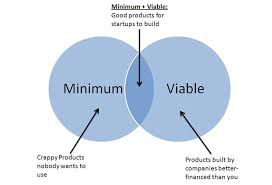
It just has the core features. These are the features that solve a main problem for your users. It’s about finding the “minimum” that is still “viable.” Viable means it works.
It provides value. People can use it and get something out of it.
Imagine you have a service that connects dog walkers with dog owners. Your big dream might be an app. It could have GPS tracking, payment processing, reviews, and even a social network for dog lovers.
That’s a lot. But what’s the absolute core need?
Dog owners need someone to walk their dog. Dog walkers need people who need their service. So, your MVP might just be a simple website or even a well-managed social media group.
It lists available walkers. It lists owners looking for walks. They can then connect directly to arrange details.
This MVP solves the main problem: finding each other. It’s minimal because it doesn’t have all the fancy app features. But it’s viable because it actually works for users.
They can get a dog walked. Walkers can find jobs.
Why Build an MVP First?
Starting with an MVP offers big benefits. It lets you test your core idea in the real world. You get feedback from actual users.
This is super important. You might think your idea is great. But users might tell you something different.
They might use it in ways you never expected. Or they might point out a missing piece you didn’t see.
An MVP also saves you a lot of resources. Building a full product takes tons of time and money. If your idea doesn’t catch on, you’ve lost a lot.
With an MVP, you invest less. You learn more. This means you can pivot if needed.
You can change your direction based on what you learn. This is much cheaper and easier than changing a huge, finished product.
It’s about speed and learning. You get your product in front of people faster. You get their honest opinions.
Then you can build the next version. And the next. Each step is informed by real data.
This makes your product development much more effective. It’s a smart way to build something that people actually want.
Key Features of a Successful MVP
Not all MVPs are created equal. A good MVP has a few key traits. First, it must solve a real problem.
It can’t just be a cool gadget. It needs to address a genuine need or pain point for a specific group of people. This group is often called your “early adopters.” They are the ones most eager for your solution.
Second, it must be usable. Even with minimal features, it needs to work smoothly. Users should not get frustrated trying to use it.
The experience should be clear. They should understand how to get value from it. If it’s confusing or buggy, people won’t stick around.
Third, it must have a way to collect feedback. This is the whole point of an MVP. You need to be able to talk to your users.
You need to see how they use it. You need to ask them questions. This feedback loop is what drives the next steps in development.
Whether it’s surveys, interviews, or in-app feedback tools, make it easy for users to tell you what they think.
Finally, it should be designed to learn. The primary goal of an MVP is not to make a profit right away. It’s to learn.
You want to learn if your idea is good. You want to learn how to make it better. You want to learn who your real customers are.
Every aspect of your MVP should be geared towards gathering this crucial knowledge.
MVP vs. Prototype vs. MMF
MVP (Minimum Viable Product): A working product with core features. Focuses on learning from real users. It’s the first version released to customers.
Prototype: A simulation or model. Used to test concepts or design. Not a fully functional product.
Often used internally or with a very small group.
MMF (Minimum Marketable Feature): The smallest set of features that can be released to the market and still be valuable to customers. It’s a marketable product, but not necessarily the full vision.
Famous MVP Examples That Changed the Game
Many of the biggest companies today started with very simple MVPs. They used this approach to prove their ideas. They grew based on what their users told them.
Dropbox: The Explainer Video MVP
Dropbox is a service many of us use daily. It syncs files across all your devices. It seems pretty technical.
You might think they built complex software first. But Drew Houston, the founder, had a problem. He kept forgetting his USB drive.
He knew others did too.
Instead of building the full syncing technology right away, Dropbox’s first MVP was a simple explainer video. It showed how the product would work. It demonstrated the benefits.
The video went viral. It showed there was huge demand. People signed up for the waitlist in the tens of thousands.
This proved the concept. It proved people wanted this solution. Only then did they focus on building the actual technology.
This video was an incredibly smart way to validate their idea with minimal development.
Airbnb: Simple Website for Extra Cash
Airbnb is now a global travel giant. But it started very simply. The founders, Brian Chesky and Joe Gebbia, needed to pay rent for their San Francisco apartment.
They noticed a local design conference was coming. Hotels were booked. They had air mattresses.
So, they created a basic website. They called it “Airbed & Breakfast.”
Their MVP was just three pages. It showed pictures of their apartment. It described their offer: a place to stay, with breakfast.
They listed their rooms and air mattresses. They targeted the conference attendees. They got their first three guests.
This experience taught them a lot. They learned about hosting. They learned about pricing.
They learned that people were willing to stay in someone’s home. This early success, born from a simple need, paved the way for the massive platform we know today.
Zappos: Proving Online Shoe Sales
Buying shoes online sounds simple now. But back in 2000, it was a big question. Would people really buy shoes without trying them on?
Nick Swinmurn wanted to find out. He didn’t have a huge warehouse of shoes or fancy logistics.
His MVP was very creative. He went to local shoe stores. He took pictures of shoes on the shelves.
He posted these pictures on a simple website. If someone ordered a pair online, Nick would go back to the store. He would buy the shoes.
Then he would ship them himself. This proved that people would buy shoes online. It showed demand.
It didn’t require massive upfront investment in inventory or a complex delivery system. It was a lean way to test a core assumption.
Facebook: Connecting College Students
Mark Zuckerberg started Facebook (then called “Thefacebook”) to connect students at Harvard. His initial MVP was very limited. It was only accessible to Harvard students.
You had to have a Harvard email address to sign up. The features were basic: profiles, the ability to connect with friends, and the “wall” to post messages.
The goal was simple: make it easy for Harvard students to find and connect with each other online. It wasn’t for the whole world. It wasn’t for businesses.
It was a highly focused MVP for a specific community. By proving its value to this initial group, they gained traction. They could then expand to other colleges, and eventually, the entire public.
This focused approach allowed them to build a strong foundation.
Quick Scan: MVP Success Factors
| Company | MVP Approach | Key Learning |
| Dropbox | Explainer Video | High demand for file syncing |
| Airbnb | Basic website (Airbed & Breakfast) | People will pay to stay in homes |
| Zappos | Manually fulfilling online orders | Willingness to buy shoes online |
| College-only network | Strong desire for social connection |
Building Your Own MVP: What to Consider
So, how do you apply this to your own idea? The first step is to clearly define the problem you are solving. Who are you solving it for?
What is the absolute, single most important job your product needs to do for them?
Once you know the core problem, list out all the features you can imagine for your product. Don’t hold back. Write down everything.
Now, look at that list. Which of those features are absolutely essential to solve the core problem? Which ones are “nice to have” but not critical for the very first version?
This is where you become ruthless. You need to cut away anything that isn’t essential for the primary function. Ask yourself: “Can someone still get value from my product if this feature is missing?” If the answer is yes, it probably doesn’t belong in your MVP.
Think about the simplest way to deliver that core value. Can it be a website? A basic app?
Even a service delivered manually? The goal is to get something functional to users as quickly as possible. The technology or the platform should serve the core purpose, not be the purpose itself.
How to Identify the Core Problem
To find the core problem, talk to potential users. Ask them about their daily lives. What are their biggest frustrations?
What tasks take up too much time? What do they wish they had a better way to do? Listen more than you talk.
For example, if you’re thinking about a meal planning app, don’t ask “Would you use a meal planning app?” Ask “What’s the hardest part about planning meals for your family?” Some might say “deciding what to cook.” Others might say “making a grocery list.” Someone else might say “sticking to a budget.” Your MVP will target the most common or most painful problem.
I remember working with a small business owner who wanted to create an online course. She had so many ideas for modules, interactive quizzes, and community forums. But when we dug deep, her main clients were struggling with one specific aspect of her expertise.
We decided the MVP would be a simple PDF guide and a single live Q&A session focused only on that one problem. It was incredibly successful. It validated her teaching method and identified her true audience need before she built a whole course platform.
Prioritizing Features for Your MVP
Feature prioritization can be tough. Think of it like peeling an onion. You want to get to the core.
You can use a simple method. Create two columns: “Must Have for MVP” and “Can Wait.”
For every feature you thought of, ask: “Is this feature absolutely necessary for the product to fulfill its primary purpose and provide basic value?”
- If yes, it goes in the “Must Have” column.
- If no, it goes in the “Can Wait” column.
Be honest with yourself. It’s easy to convince yourself something is essential. But if users can still achieve their main goal without it, it’s not MVP material.
For instance, if you’re building a task management app, the ability to create and complete tasks is a must-have. Fancy color-coding options or integration with every calendar app known to man? Those can definitely wait.
The goal is to build the smallest possible thing that solves a real problem for a specific group of people. This allows you to get it into their hands quickly. You can then learn from them and build what they actually need next.
MVP Feature Checklist
Core Problem Solved?
- Yes / No
Basic Usability Achieved?
- Yes / No
Feedback Mechanism Included?
- Yes / No
Minimal Scope Met?
- Yes / No
The “Viable” Part: Making it Usable
While “minimum” is about cutting features, “viable” is about quality. Your MVP needs to work. It needs to be reliable.
Users shouldn’t encounter constant bugs or crashes. A broken MVP is worse than no MVP. It gives users a bad impression of your idea.
It doesn’t need to be perfect or have a beautiful design at this stage. But it should be functional and provide a decent user experience. Think about the flow.
Can a user easily accomplish the main task? Is it intuitive enough?
For example, if you’re building a simple photo-sharing app as an MVP, it should allow users to upload photos and see them. It doesn’t need advanced editing filters or complex privacy settings. But the upload and view functions should work flawlessly.
Users should be able to understand how to do these things without a manual. This makes it “viable.” They can get value from it.
Gathering Feedback: The Lifeblood of Your MVP
Once your MVP is out there, the real work begins: learning. You need systems in place to get feedback. This can be done in several ways:
- Direct Conversations: Talk to your early users. Schedule calls. Ask them to walk you through how they use it. What did they like? What was confusing? What’s missing?
- Surveys: Use simple online surveys to gather quantitative data. Ask specific questions about features or satisfaction.
- In-App Feedback: If it’s an app or website, embed a simple feedback form.
- Analytics: Track user behavior. Where do they click? Where do they drop off? Tools like Google Analytics can be invaluable.
It’s important to listen to both positive and negative feedback. Positive feedback tells you what’s working well and what to build on. Negative feedback highlights areas for improvement or potential flaws in your core assumptions.
I once saw a team build a complex project management tool as an MVP. It had many features. But when they launched, users were only using one feature: the simple to-do list.
All the complex features were ignored. They learned that their users just needed a better to-do list, not a full project management suite. They pivoted.
They focused on making that one feature amazing. That simple lesson saved them from building something nobody wanted.
Feedback Loop: MVP to Next Iteration
Release MVP
Collect User Feedback
Analyze Data & Insights
Identify Key Learnings
Plan Next Iteration (Add/Refine Features)
Repeat
When is it Time to Move Beyond the MVP?
You’re not stuck with an MVP forever. The goal is to evolve. You move beyond the MVP when you have validated your core assumptions.
You know that people want your solution. You have a clear understanding of what features they need next.
This usually happens after several iterations. You’ve built, measured, and learned. You’ve refined the product based on user input.
You’ve reached a point where adding more features to the existing core makes sense. You’re no longer guessing. You’re building based on evidence.
Look for signs of traction. Are you seeing consistent user growth? Are users actively engaged?
Are they providing positive feedback about the core value? These are indicators that your MVP has proven its worth. It’s time to scale up and build out the full vision, guided by the knowledge you’ve gained.
It’s also important to understand your market. Are there competitors? How does your MVP compare?
If you see a strong need and a clear path to improvement, then it’s time to invest more. The MVP has served its purpose: to prove the concept and reduce risk.
Common Pitfalls to Avoid with MVPs
Even with a great strategy, there are common mistakes people make. One is building too much. This is the “Minimum” being ignored.
Developers get excited and add features that weren’t in the original plan. It’s tempting, but it defeats the purpose of the MVP.
Another pitfall is building something that isn’t “Viable.” If the product is buggy, slow, or hard to use, users will abandon it. They won’t provide good feedback. They’ll just leave.
Not collecting or acting on feedback is also a major issue. The MVP is a learning tool. If you don’t use the data, you’re missing out on its biggest benefit.
You might end up building a more complex product that still doesn’t meet user needs.
Finally, confusing an MVP with a Minimum Marketable Feature (MMF) can be a problem. An MMF can stand on its own as a product. An MVP’s main goal is learning, even if it’s not perfectly polished or feature-complete for a broad market.
You need to keep the learning objective front and center.
I saw a startup launch an app for local gardeners. Their MVP was supposed to be simple. But they added too many features: social sharing, garden planning tools, pest identification.
The app was clunky. Users got lost. They spent so much building “more” that they forgot to make the core “enough.” They didn’t get the feedback they needed because nobody could figure out how to use it properly.
Conclusion: Embrace the Power of Starting Small
Building an MVP is not about creating a lesser product. It’s about being smart. It’s about being efficient.
It’s about building something that truly resonates with your audience. By focusing on the core problem and delivering a simple, usable solution, you dramatically increase your chances of success.
Remember the examples: Dropbox, Airbnb, Zappos, Facebook. They all started with a laser focus on solving one problem for a specific group. They used their first versions to learn and grow.
Embrace this approach. Test your ideas leanly. Listen to your users.
Build what they truly need.
Frequently Asked Questions About Minimum Viable Products
What does “Minimum Viable Product” really mean?
A Minimum Viable Product (MVP) is the simplest version of your product. It has just enough features to solve a core problem for early users. Its main purpose is to gather feedback and learn how to improve the product without spending too much time or money on building everything at once.
Is an MVP the same as a prototype?
No, they are different. A prototype is a model or simulation. It’s used to test ideas or designs, often internally.
An MVP is a real, working product that you release to actual customers to get feedback on its market viability and user experience.
How many features should an MVP have?
There’s no set number. The focus is on the absolute core features needed to solve the primary problem. It could be just one or two features.
The key is that these features must be enough to provide value to the user and allow you to gather meaningful feedback.
Should an MVP be profitable?
Profitability is not the primary goal of an MVP. The main goal is learning. While an MVP might generate some revenue, its success is measured by the insights gained and the validation of the product idea, not by immediate profit margins.
What if users don’t like my MVP?
That’s exactly why you build an MVP! If users don’t like it, or if it doesn’t solve their problem as you expected, that’s valuable information. It means you can pivot or make significant changes based on this feedback before investing heavily in a full product that might fail.
It’s a learning opportunity, not a failure.
How do I decide which features to include in my MVP?
Start by identifying the single, most important problem your product solves. Then, list all potential features. Ruthlessly cut any feature that isn’t absolutely essential for solving that core problem.
Focus on delivering that one main benefit exceptionally well. Talk to potential users to understand their biggest pain points.